Routine & Upkeep
Dust Settles on a Schedule You Can Predict
Household dust comes mostly from fabric and skin and settles fastest on horizontal surfaces near sources, which makes some cleaning weekly and some almost never.

Dust is not distributed evenly and does not accumulate at the same rate everywhere. Knowing where it comes from tells you which surfaces need attention and which do not.
Most dust is generated indoors
The bulk of household dust is shed skin, fibres from clothing and soft furnishings, and fine debris carried in on shoes.
Fabric is the largest contributor, which is why bedrooms and rooms with carpet, curtains and upholstery dust faster than a tiled kitchen does.
Outdoor dust matters mainly near open windows and entrances, and it is heavier and coarser, settling close to where it enters.
Horizontal surfaces near sources fill first
Dust settles under gravity, so horizontal surfaces collect it and vertical ones largely do not, except where static or grease holds it.
Proximity matters as much as orientation. A shelf beside a bed accumulates faster than an identical shelf across the room.
Height affects it too. Low surfaces receive dust disturbed and redistributed by movement, while high surfaces accumulate slowly but are never cleaned.
Airflow concentrates it in specific places
Air moving through a room carries fine particles and drops them where it slows, which is behind furniture, in corners and under beds.
These are exactly the places that go uncleaned, so the accumulation there is disproportionate to the rest of the room.
Radiators create their own convection currents and produce a characteristic dark mark on the wall above, which is deposited dust rather than staining.
Removing rather than redistributing
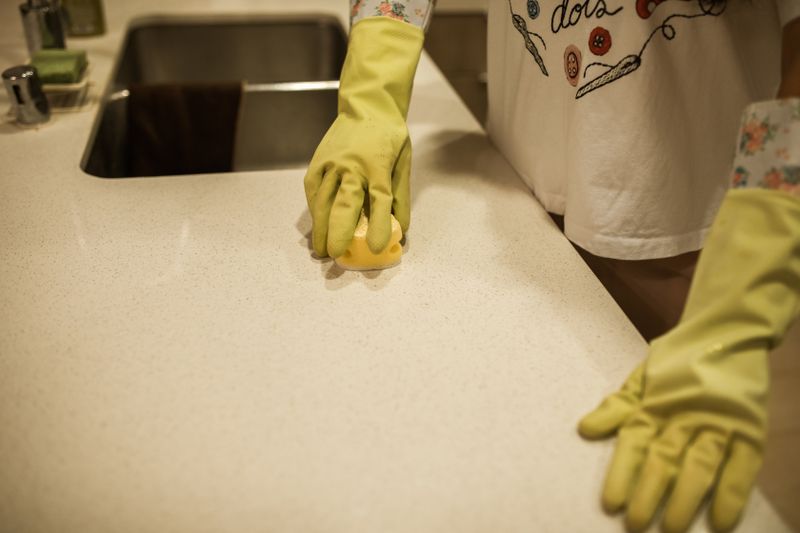
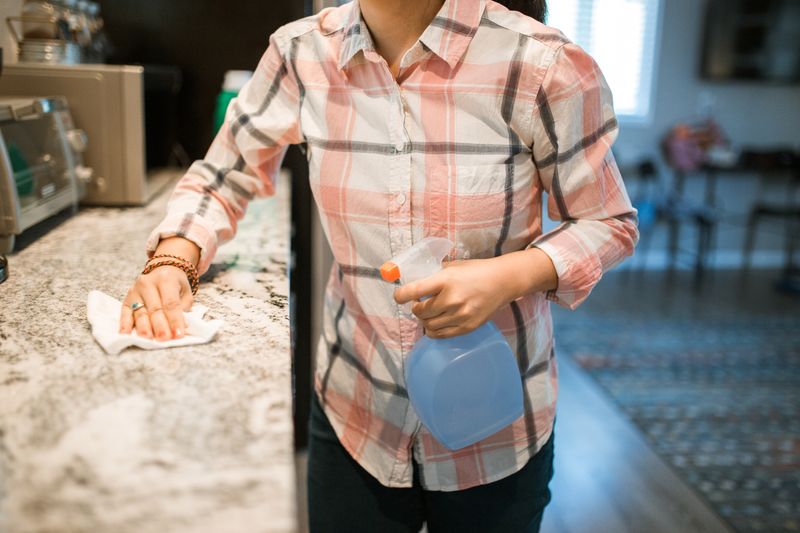
A dry cloth or a feather duster lifts dust into the air, where it circulates and settles again within hours. The room looks clean and is not.
A damp cloth traps particles, and a vacuum with a fine filter removes them, which is why both are more effective than dry dusting.
Working from high surfaces downward means anything dislodged falls onto surfaces not yet cleaned, rather than onto ones already done.
Reducing the source beats cleaning more often
Washing bedding regularly removes a large fraction of the fabric and skin debris at its origin, and it has more effect than dusting the room.
Removing shoes at the door cuts the outdoor contribution substantially, particularly the gritty material that damages floors as it is walked in.
Fewer soft surfaces means less generation, which is why a sparsely furnished room stays clean longer without any change in cleaning habits.
Questions readers ask
Do I need to wash out recycling?
A rinse is generally enough, and it does not need to be spotless. The aim is to remove residue that would contaminate other material in the same collection.
Why does my bin smell even when it is empty?
Residue and absorbed liquid on the bin surface itself. Wash it with hot soapy water, dry it fully and it usually resolves.
Also by Zubin Wadia
- The Viewing Questions That Tell You More Than the PhotographsYour First Place
- What a Landlord Repairs and What Falls to YouYour First Place
- The Three Things You Only Notice After You Move InYour First Place
- Cooling Cooked Food Is the Step Almost Everyone SkipsCooking for One