Your First Place
The Viewing Questions That Tell You More Than the Photographs
A flat photographs well from one corner and badly from every other. Twenty minutes and a short list of blunt questions will tell you what a gallery never can.
The theory of what to ask at a rental viewing is well covered elsewhere. This is about the version you meet in practice.
What holds up in practice
- A wide-angle lens routinely makes a room look half again as large as it is.
- Running the taps and opening every window takes a minute and exposes most maintenance problems.
- Ask what has been repaired in the past year, because a landlord who can list jobs is a landlord who does them.
What a wide lens does to a small room
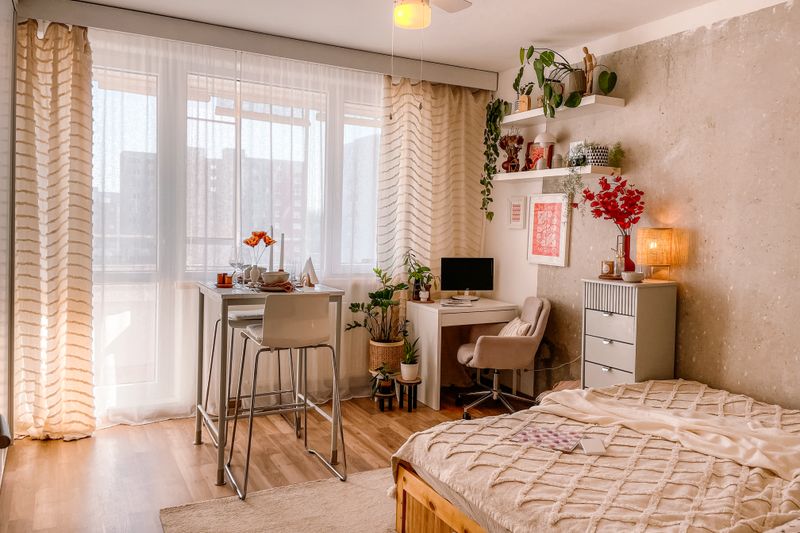
A wide-angle lens stretches the corners of a frame, which is why a listing photograph of a bedroom rarely matches the room you walk into. Stand in the doorway and count paces across the floor instead, because your own stride is roughly consistent and a photograph is not.
Listing photographs are also taken on the brightest day of the year with every lamp switched on and every curtain pulled fully back. Ask which direction the main window faces, since a room that never takes direct sun feels colder and darker than any picture of it. The missing photograph matters most: no picture of the bathroom or the kitchen usually means somebody decided that neither would help.
Run everything that runs
Turn the hot tap on and time how long it takes to run hot, because a slow answer means a distant or tired water heater. Flush the toilet and run the shower together to see whether the pressure collapses the moment two outlets draw from the same supply. Open and close every window, since frames painted shut are both a ventilation problem and a hint about how repairs get handled here.
By the second month, look under the sink with a torch for water stains, swollen chipboard or a bucket that somebody has quietly left in position. None of this is rude, and a landlord who treats it as rude has told you something useful about the coming twelve months.
Heating, insulation and the bill you inherit
Ask what the heating system is and when it was last serviced, because an old system in a cold flat sets your entire winter budget. Single glazing, an uninsulated top floor and a flat sitting above an unheated garage all cost money that never appears in the rent. Ask to see a recent energy bill or the property energy rating, which many countries now require a landlord to provide before letting.
By the second month, a flat sandwiched between two heated neighbours is cheaper to warm than the same flat on a corner with three exposed external walls. Rent is the number you negotiate, but heating is the number that quietly decides whether the flat was ever affordable at all.
The parts of the flat that sit outside it
Go back once in the evening, because a street that is quiet at eleven in the morning may be a different place at eleven at night. Stand still at the party wall for a moment while the agent is talking, and notice whether the building has hard floors throughout. Check where the bins live, how far the nearest stop is on foot, and whether the front door of the building actually latches behind you.
Ask who else is in the building, since a flat above a late bar and a flat above a retired couple are not the same home.
Communal stairwells describe the management: peeling paint and dead bulbs in a shared hallway rarely coexist with a fast repair service.
Questions that describe the landlord, not the flat
Ask who you call when something breaks at nine on a Sunday evening, and whether that person is the owner or a managing agent. Ask how long the previous tenant stayed and why they left, then pay attention to whether the answer is specific or carefully vague.
Ask what has been repaired in the past year, because three named jobs is evidence and a general reassurance is not. Ask what is included and get the answer in writing, since verbal promises about a fridge or a shed rarely survive a later dispute. A tenancy is a working relationship with whoever holds the keys, and you are interviewing them at least as much as they are interviewing you.
Buy the cheap version first; a month of use tells you whether it deserved better.
Between the viewing and the money
Write your notes on the platform or in the car, not three flats later, because viewings blur together faster than anyone expects. Photograph anything already damaged while you are standing there, since those pictures cost nothing and may be worth your deposit at the end. Never hand over money to hold a property before you have read the tenancy terms and confirmed who legally owns or manages it.
Holding fees, deposit limits and what a landlord may charge differ sharply between countries, so check your national or regional tenancy guidance first. Walking away from a flat you spent a Saturday viewing feels wasteful, and it is still far cheaper than a year in the wrong one.
The takeaway
Twenty minutes of running taps and asking awkward questions is the cheapest survey you will ever get.
Do the ten-minute version tonight rather than the proper version never.
Questions readers ask
How many flats should I see before deciding?
Enough to calibrate what the money buys in that area, which is usually three or four. The point is not choice for its own sake but a reference price you can judge the next one against.
Is it a bad sign if the current tenant is not there?
Not by itself, but a sitting tenant is the only person in the room with no reason to sell you the flat. If you get a chance to ask them anything, ask about repairs and heating.
Also by Zubin Wadia
- What a Landlord Repairs and What Falls to YouYour First Place
- The Three Things You Only Notice After You Move InYour First Place
- Cooling Cooked Food Is the Step Almost Everyone SkipsCooking for One
- Half an Onion, Half a Tin, and What to Do With the RestCooking for One