Your First Place
The Three Things You Only Notice After You Move In
Sockets, storage and light are invisible during a viewing and decide how the flat works every day afterwards. All three have workarounds, and two of them are cheap.

This looks at the practical shortcomings of a flat from the practical end — what holds up once conditions stop being ideal.
What holds up in practice
- Count sockets during a viewing, because an extension lead is a compromise rather than a fix.
- Never daisy-chain extension leads or run high-power appliances from one.
- Vertical space is the storage most small flats have and nobody uses.
Sockets, and why there are never enough
Older properties were wired when a household owned a handful of appliances, so socket counts reflect a very different pattern of use. Count them room by room at the viewing and note where they are, since a socket behind a fitted wardrobe is not really a socket.
The bedroom usually needs power on both sides of the bed and the living room needs power at the sofa rather than at the door. A kitchen with two working sockets forces a rotation of kettle, toaster and anything else, which is a daily irritation. This is worth negotiating before signing, because adding sockets is electrical work that only a qualified electrician should carry out.
Using extension leads without creating a hazard
A good multi-way extension lead with a surge-protected block solves the desk and the television corner perfectly well. Do not plug one extension lead into another, since the chain concentrates load on a single outlet that was never rated for it. High-power appliances such as heaters, kettles and washing machines should go directly into a wall socket rather than through a lead.
Keep leads uncoiled when in use, because a coiled cable under load traps heat inside its own windings. Any lead that feels warm, smells of hot plastic or has a damaged casing goes in the bin rather than back into the socket.
Storage that a small flat already has
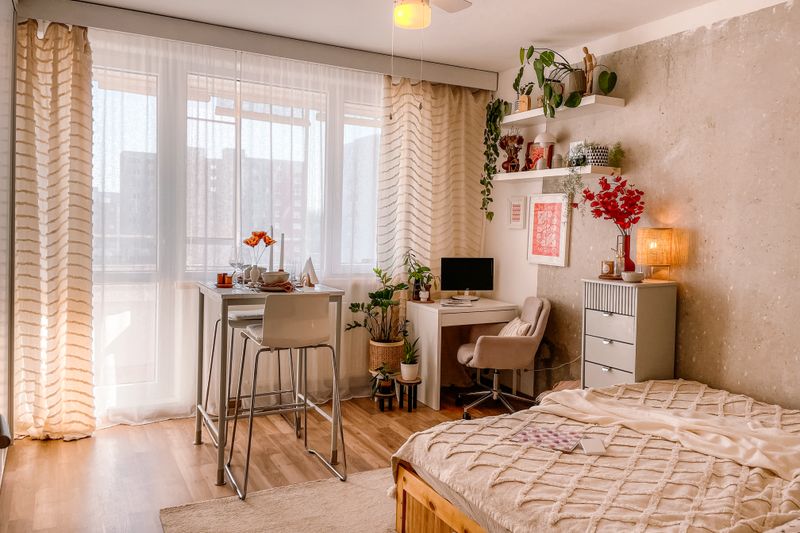
Most small flats have far more vertical space than horizontal space, and the metre above head height is almost always empty. High shelves suit the things you use rarely, which is exactly the category filling the cupboard you need daily. Under-bed volume is usually a third of a cubic metre going to waste, and shallow boxes on castors make it accessible.
The backs of doors take hooks and over-door rails, which is where coats, bags and ironing boards can live without floor space. Anything that goes on a wall needs the landlord's permission and the right fixing, so ask before drilling and read the fixings guidance first.
Light, and the difference between bright and usable
A single central ceiling light produces flat overhead illumination that makes every room look like a waiting area after dark. Adding two or three lamps at different heights gives you the ability to light only the part of the room you are in. Colour temperature changes the feel more than brightness does, and warmer light in living spaces with cooler task light at a worktop works well.
Rooms with a single window lose usable daylight far earlier in the afternoon than a listing photograph ever suggests.
Mirrors positioned opposite or beside a window genuinely increase perceived daylight, which is the one decorating trick that survives scrutiny.
Noise, temperature and the other invisibles
Hard floors in flats above transmit impact noise, and no amount of soft furnishing at your end fully cures somebody else's footsteps. A flat that is warm in October may be cold in January, because the difference is insulation rather than heating output. Bathroom extract fans that are noisy get switched off, which is how a ventilation problem becomes a mould problem within one winter.
Water pressure and hot water recovery time only reveal themselves once two people or two appliances are drawing at once. Note these in the first fortnight, since anything genuinely defective is easier to report as a fault early than as a complaint later.
Buy the cheap version first; a month of use tells you whether it deserved better.
Fixing what you can and reporting the rest
Draught excluders, thicker curtains and a door snake are cheap, removable and make a measurable difference to comfort and heating cost. Free-standing storage, lamps and rails all move with you, which makes them better value than anything fixed to a rented wall. Anything requiring wiring, plumbing or drilling into structure is either a landlord request or a job for a qualified trade.
By the second month, report defects rather than working around them permanently, because a fault you have quietly tolerated for a year is harder to raise. The general principle is to solve comfort yourself and to escalate anything involving the building fabric or a service.
The takeaway
Count the sockets at the viewing, buy the lamps in week one, and use the metre of wall above your head.
Do the ten-minute version tonight rather than the proper version never.
Questions readers ask
Can I add sockets myself if I am careful?
No. Fixed wiring work is regulated in most countries and often legally restricted to registered electricians, and in a rented flat it is also a breach of most agreements. Ask the landlord.
Is a plug-in heater a reasonable answer to a cold room?
As a short-term supplement, yes, and it is expensive to run and must go straight into a wall socket, never an extension lead. Persistent inadequate heating is a repair issue to report.
Also by Zubin Wadia
- The Viewing Questions That Tell You More Than the PhotographsYour First Place
- What a Landlord Repairs and What Falls to YouYour First Place
- Cooling Cooked Food Is the Step Almost Everyone SkipsCooking for One
- Half an Onion, Half a Tin, and What to Do With the RestCooking for One