Routine & Upkeep
The Ten-Minute Reset That Makes a Flat Look Kept
There is a large difference between a flat being clean and a flat looking kept, and most of it comes down to about eight surfaces. Ten minutes on those is worth an hour anywhere else.
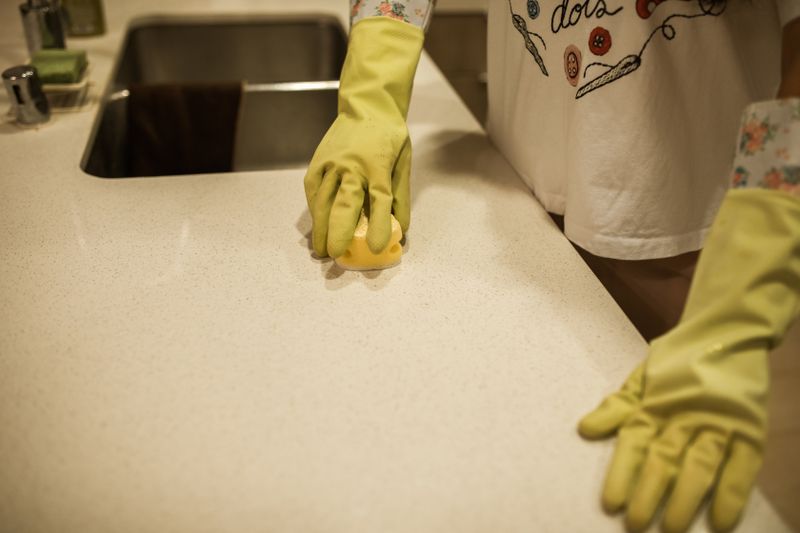
What follows is the working version of a daily tidying reset: the decisions in the order you actually meet them, with the reasoning attached.
Before you start
- Visible clutter dominates the impression of a room far more than actual cleanliness.
- A fixed short reset works because it has a defined end point.
- Doing it at the same time each day removes the decision to start.
Why surfaces carry the impression
A room reads as tidy or untidy based on its horizontal surfaces, since those are what the eye scans first. A spotless flat with a covered table looks worse than a dusty one with clear surfaces, which is unfair and consistently true. That means clearing surfaces produces a disproportionate return relative to any other cleaning activity.
The same applies to floors, where a clear floor reads as kept even when it has not been cleaned recently. None of this substitutes for actual cleaning, and it does determine whether the flat feels liveable on any given evening.
The eight places
The kitchen worktop, the dining or work table, the sofa, the coffee table, the bedroom chair, the hallway floor, the bathroom surface and the sink. Those eight locations account for the overwhelming majority of visible clutter in a one-person flat. Working through them in a fixed order takes about ten minutes and requires no decisions once the order is established.
By the second month, the bedroom chair deserves particular mention, since it accumulates clothing that is neither clean nor dirty and belongs in neither place. Making a specific home for those in-between clothes, whether a hook or a rail, removes the single most persistent pile in most flats.
Why a fixed end point matters
An open-ended tidying session has no completion condition, which makes it psychologically harder to start. Ten minutes with a timer has a clear end, which is what makes it repeatable on a day when you have no enthusiasm.
It also caps the cost, so the reset never expands into an evening you did not intend to spend. Anything unfinished at the end is simply left, since the point is the frequency rather than the completeness. Repeating a small reliable action is what keeps a flat level, and a perfect occasional effort does not.
Choosing the time
Attaching the reset to an existing fixed point, such as after dinner or before bed, removes the decision about when to do it. Doing it in the evening means waking up to a flat that is already level, which measurably changes how the next day starts. Doing it before leaving in the morning suits people who find the evening version impossible.
What matters is that it is the same time daily rather than which time it is.
Pairing it with something you already do every day is the mechanism that makes it stick without any willpower.
Doing it when you cannot face it
On a bad day, do the kitchen sink alone, which is a two-minute action with a disproportionate effect on how the flat feels. Set the timer for five minutes instead of ten, since a reduced version is enormously better than a skipped one.
Cooking for one, work in one room only rather than attempting the whole circuit. Do not treat a missed day as a broken system, because a habit measured over a month tolerates several missed days. The habit that survives is the one you are permitted to do badly, which is the opposite of how most people design routines.
Leave gas, mains electrics and anything behind a wall to someone qualified and insured.
What it does not cover
The reset handles clutter, not dirt, so floors, bathrooms and kitchens still need actual cleaning on a periodic basis. It also does not address storage problems, since clutter that has nowhere to go simply moves between surfaces.
If the reset keeps taking twenty minutes, the flat has more objects than storage, which is a different problem to solve. Periodic decluttering is what fixes that, and it is a separate exercise done occasionally rather than nightly. Used correctly, the reset is a maintenance action that keeps the flat at whatever level the deeper systems have set.
The takeaway
Eight surfaces, same order, same time every day, and a timer so it ends.
Living alone is a skill, and every skill looks like luck from outside.
Questions readers ask
Does the reset replace proper cleaning?
No, and it makes proper cleaning much faster, because most cleaning time is spent clearing surfaces before anything is actually cleaned.
What if ten minutes is not enough?
Then the flat is above the level a daily reset can maintain, and it needs one larger session to reset the baseline. After that the ten minutes usually holds it.
Also by Sahil Raina
- Damp Has Three Causes and They Are Not Fixed the Same WayYour First Place
- The Inventory You Take on Day One Decides the Argument at the EndYour First Place
- Measure the Doorway Before You Buy the SofaYour First Place
- Reading a Tenancy Agreement Line by LineYour First Place