Routine & Upkeep
Four Cleaning Products Are Enough and Two Must Never Meet
The cupboard full of bottles is mostly marketing. Four products cover a flat, and the important knowledge is which combinations are genuinely dangerous.

The theory of household cleaning products is well covered elsewhere. This is about the version you meet in practice.
What holds up in practice
- Never mix chlorine bleach with ammonia-based cleaners or with acidic products.
- Acidic cleaners remove limescale; alkaline cleaners remove grease.
- Store products in original labelled containers, out of reach of children and pets.
The four that cover a flat
An all-purpose cleaner handles most everyday surfaces and is the one you will use daily. A limescale remover, which is acidic, deals with kettles, taps, shower screens and toilets in hard water areas.
A degreaser or a strong alkaline cleaner handles ovens, extractor filters and heavy kitchen grease. A disinfectant is useful for specific situations such as after handling raw meat or during illness, rather than as an everyday product. Add microfibre cloths and a decent brush and that is genuinely the whole list for a one-person flat.
The combinations that are dangerous
Chlorine bleach mixed with an ammonia-based cleaner produces chloramine gas, which causes serious respiratory injury in an enclosed room. Chlorine bleach mixed with an acid, including many limescale removers and vinegar, releases chlorine gas. Never combine products, never use one immediately after another on the same surface without rinsing, and never store them decanted together.
In a small flat, a bathroom is a small enclosed space with poor ventilation, which is exactly where these incidents happen. If you have mixed something and there is an irritating smell, leave the room, ventilate it and seek medical advice if symptoms persist.
Reading a label properly
The hazard symbols on a container are standardised in most countries and tell you the type of risk at a glance. The instructions state the dilution, and using a product neat where it should be diluted damages surfaces and wastes it.
By the second month, the contact time matters for disinfectants, since most need to stay wet on the surface for a stated period to work. Manufacturers list which surfaces a product must not be used on, and natural stone, aluminium and some plastics appear frequently. Keep the original container, since the label is the safety information and a decanted spray bottle has none.
Chemistry that explains the choices
Limescale is a mineral deposit that dissolves in acid, which is why vinegar and citric acid work and detergent does not. Grease is a fat that reacts with alkaline cleaners, which is why oven cleaners are strongly alkaline and require gloves. Soap scum is a combination of both, which is why bathrooms often need an acidic product followed by rinsing.
On a Sunday evening, disinfection is a separate function from cleaning, and a surface must generally be clean before a disinfectant can work properly.
Understanding these four categories means you can choose a product for a problem rather than buying one of everything.
Protective habits
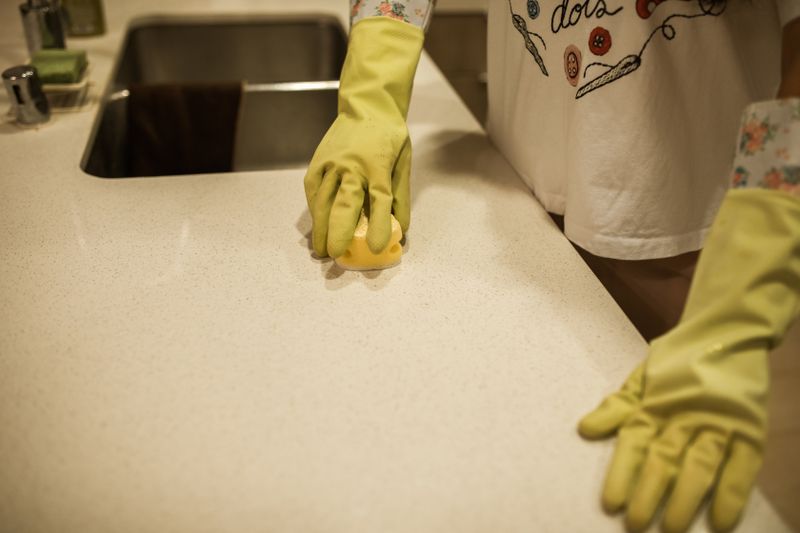
Wear gloves for anything concentrated, since repeated exposure causes contact dermatitis even with ordinary household products. Ventilate while cleaning, particularly in bathrooms and when using anything with a strong smell. Use eye protection with oven cleaners and drain products, which are caustic and cause serious injury on contact.
Never transfer products into food or drink containers, which is a recognised cause of accidental poisoning. Store everything out of reach of children and pets and away from heat, and keep the emergency number for poisoning in your phone.
What you do not need
Separate products for every surface in the home are a marketing structure rather than a chemical necessity. Antibacterial versions of everything are unnecessary for routine domestic cleaning and are worth reserving for specific situations. Air fresheners mask smells rather than removing them, and the smell usually has a source worth finding.
The version that survives a bad week: many everyday jobs need only hot water and a microfibre cloth, which is both cheaper and gentler on surfaces. A smaller cupboard is also a safer one, since most dangerous mixtures happen in homes with a great many bottles under the sink.
The takeaway
Four products, gloves, ventilation, original labels, and never bleach with anything.
Do the ten-minute version tonight rather than the proper version never.
Questions readers ask
Is vinegar a safe universal cleaner?
It works well on limescale and it is acidic, so it damages natural stone and some finishes and must never be combined with bleach. Useful, not universal.
Do I need a disinfectant at all?
For routine cleaning, usually not, since removing soil removes most of the problem. It earns its place after raw meat handling, during illness, and on specific high-touch surfaces.
Also by Zubin Wadia
- The Viewing Questions That Tell You More Than the PhotographsYour First Place
- What a Landlord Repairs and What Falls to YouYour First Place
- The Three Things You Only Notice After You Move InYour First Place
- Cooling Cooked Food Is the Step Almost Everyone SkipsCooking for One