Your First Place
Find the Stopcock Before the Pipe Bursts
There is a small set of things in every home that you need to locate exactly once and then never think about again. You want to have done it on a dry Tuesday rather than at two in the morning.

What follows is an argument about the shut-offs and meters in a home, and about where the received version of it stops being true.
The argument in brief
- The main water stopcock is the single control that stops an escaping-water bill from growing.
- Photograph every meter reading on the day you move in.
- Knowing where the consumer unit is matters; opening it up or working inside it does not.
The water shut-off
The internal stopcock is the valve that isolates the whole flat from the mains supply, and turning it closes everything downstream of it. It commonly sits under the kitchen sink, in a utility cupboard, near the entry point of the incoming pipe or beneath a floor hatch.
Older stopcocks seize if never touched, so open and close it once when you move in and again occasionally afterwards. Note whether it is a lever type, which moves through a quarter turn, or a screw-down type, which needs several full turns. In a block there may also be a shared external valve serving the whole building, which is the building manager's rather than yours.
Isolation valves and why they save the day
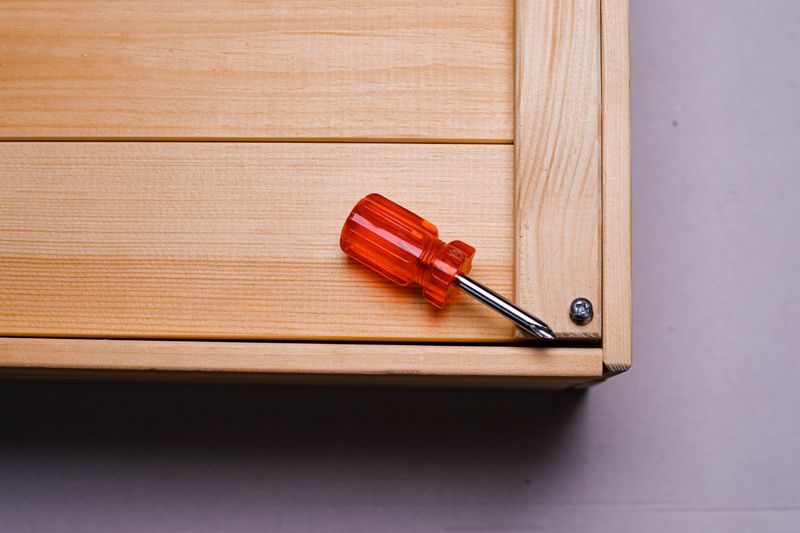
Many appliances and taps have a small local isolation valve on the supply pipe, usually operated with a flat screwdriver. Closing one of these stops the water to a single fitting without depriving the rest of the flat, which matters at three in the morning.
The version that survives a bad week: washing machines and dishwashers normally have their own lever valve behind the appliance, and closing it when away for weeks is sensible. The toilet cistern usually has a valve on its filler pipe, which is the one to close when the fill valve starts running continuously. Learning which valve serves what takes ten minutes with a torch and converts a flooding emergency into an inconvenience.
Meters and the numbers on them
Photograph the electricity, gas and water meters with their serial numbers and readings on the day you take the keys. That image is the evidence that settles the opening balance if a supplier later bills you for a previous occupant's consumption.
Note where each meter lives, because you will be asked for readings and the ones nobody can find get estimated instead. Smart meters remove the reading task and not the location task, since a fault or a supplier switch still means somebody needs access. Where meters are in a communal cupboard, find out who holds the key before the first time you need it urgently.
The electrical side, and its hard limits
Find the consumer unit, the board with the switches that cut power to individual circuits, and make sure nothing is stacked in front of it. Knowing which switch serves which room is useful, and it is worth labelling if the previous labels are illegible.
In a small flat, resetting a tripped switch after removing the offending appliance is normal householder behaviour, and it is where your involvement ends. Never open the sealed part of the unit, never work on fixed wiring and never replace a protective device with a higher rated one.
Anything beyond flipping a switch is work for a qualified electrician, and in many countries certain electrical work is legally restricted to registered trades.
Gas, if you have it
Locate the gas emergency control valve, which is the handle near the meter that shuts off the supply to the property. Learn how it operates by looking rather than by experimenting, and keep the area around it clear.
Cooking for one, if you smell gas, do not use switches, phones or naked flames in the space, open windows, leave the property and call your national gas emergency number. Gas appliances must only be worked on by an engineer registered under your country's scheme, and this is a legal requirement almost everywhere. Ask for the current gas safety documentation at the start of a tenancy, since providing it is the landlord's duty in many jurisdictions.
A routine you resent is a routine you will have abandoned by the third week.
The fifteen-minute survey
Walk the flat once with a torch and a phone, photographing the stopcock, the isolation valves, the meters, the consumer unit and any gas control. Put all of it in one album or note with the address in the title, and it will still be there in two years.
The version that survives a bad week: add the emergency numbers for water, gas and electricity in your country, plus the landlord and any out-of-hours contact. Test the smoke alarms while you are doing it, and report any that fail in writing on the same day. This is the least interesting thing you will do in your first week and the one most likely to save you thousands.
The takeaway
Spend fifteen minutes finding the shut-offs now, because the alternative is finding them while standing in water.
Living alone is a skill, and every skill looks like luck from outside.
Questions readers ask
What if the stopcock will not turn?
Do not force it with a wrench, because a seized brass valve can shear and turn a small problem into an immediate flood. Report it as a repair so it is dealt with in dry conditions.
Should I turn the water off when I go away?
For anything longer than a few days it is a sensible habit, particularly in freezing weather when a burst pipe can run unnoticed for a week. Check first whether any appliance or heating system needs a supply while you are gone.
Also by Sahil Raina
- Damp Has Three Causes and They Are Not Fixed the Same WayYour First Place
- The Inventory You Take on Day One Decides the Argument at the EndYour First Place
- Measure the Doorway Before You Buy the SofaYour First Place
- Reading a Tenancy Agreement Line by LineYour First Place