Cooking for One
Why a Small Pan Cooks Better Than a Big One
A single portion spread thinly across a large pan loses heat and steams instead of browning, which is why pan size matters more than hob power.
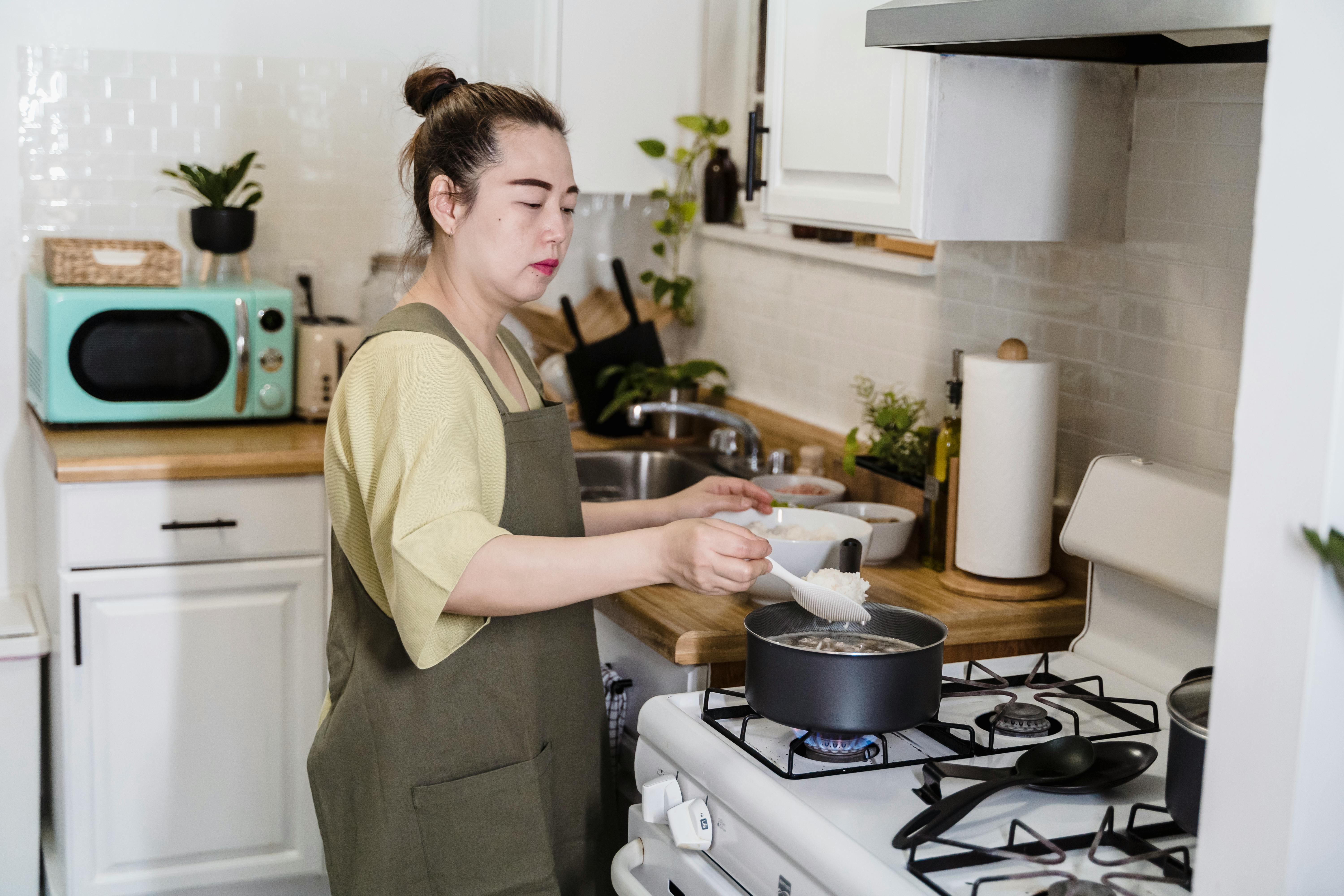
A pan that is too large for the food in it produces worse results than a smaller one, and the difference is not subtle. The cause is the ratio of food to exposed metal.
Empty pan surface wastes heat
A hob delivers heat to the base of the pan. Where the base is covered by food, that heat moves into the food; where it is bare, it radiates into the kitchen instead.
Cooking one chicken thigh in a pan sized for four means most of the energy never reaches the thigh. The pan runs hot in the empty regions and merely warm under the food.
The visible consequence is uneven cooking. The exposed metal scorches any oil sitting on it, so the fat starts to smoke and taste bitter while the food itself is still pale.
Moisture is the other half of the problem
Food releases water as it heats. In a well-filled pan that water is driven off quickly because the surface is hot enough to boil it away as it appears.
The same volume of water in an oversized pan behaves differently. Burnt oil and cooling metal slow evaporation, and the food sits in its own liquid rather than in contact with hot metal.
Once the food is sitting in liquid it is being steamed, not fried. Steaming caps the temperature at boiling point, and browning does not begin until the surface goes well past that.
Browning is a temperature threshold, not a duration
The reactions that give roasted and fried food its flavour need a dry surface at a high temperature. They are not a matter of leaving the food on the heat for longer.
This is why a portion that will not brown never improves with patience. It stays wet, the surface never reaches the threshold, and the food goes grey and tightens instead.
Reducing the pan size raises the food-to-metal ratio, keeps the surface dry and gets the browning started. The same ingredients and the same hob produce a visibly different result.
What one person actually needs
A single household is better served by a small heavy pan than a large thin one. Weight matters because a thick base holds temperature when cold food is added to it.
A pan of roughly the width of two spread hands is oversized for one portion. Something closer to a dinner plate, or smaller, suits most single servings.
Two pans cover almost everything: a small frying pan for browning and a small saucepan for anything wet. A third, larger pan earns its place only if you cook in batches.
The exception where space helps
Boiling is the case where a generous pan is genuinely better. Pasta and green vegetables benefit from enough water that the temperature barely drops when they go in.
Anything that relies on contact with hot metal wants the opposite. Frying, searing and roasting all reward crowding the surface rather than spreading the food across it.
Knowing which of the two you are doing settles the choice of pan before you start, and it removes most of the frustration of cooking a single portion well.
Questions readers ask
How much should a store cupboard cost to set up?
It is built over several shops rather than in one, which spreads the cost and stops you buying things you will not use. Add two or three items each time rather than attempting the whole list at once.
Are dried pulses worth it over tinned?
They are cheaper per portion and better in texture, and they need soaking and long cooking. For one person the practical answer is often to cook a large batch of dried ones and freeze them in portions.
Also by Nusrat Jan
- Furnish a Flat in the Order You Actually Use ItYour First Place
- The First-Night Box and Why It Gets Loaded LastYour First Place
- Cooking for One Is a Shopping Problem Before It Is a Cooking ProblemCooking for One
- Batch Cooking Without Eating the Same Dinner Five Nights RunningCooking for One