Cooking for One
Resting Meat Changes What Ends Up on the Plate
Heat drives moisture toward the center of cooking meat and tightens the muscle fibers, and a few minutes off the heat lets both settle before the meat is cut.
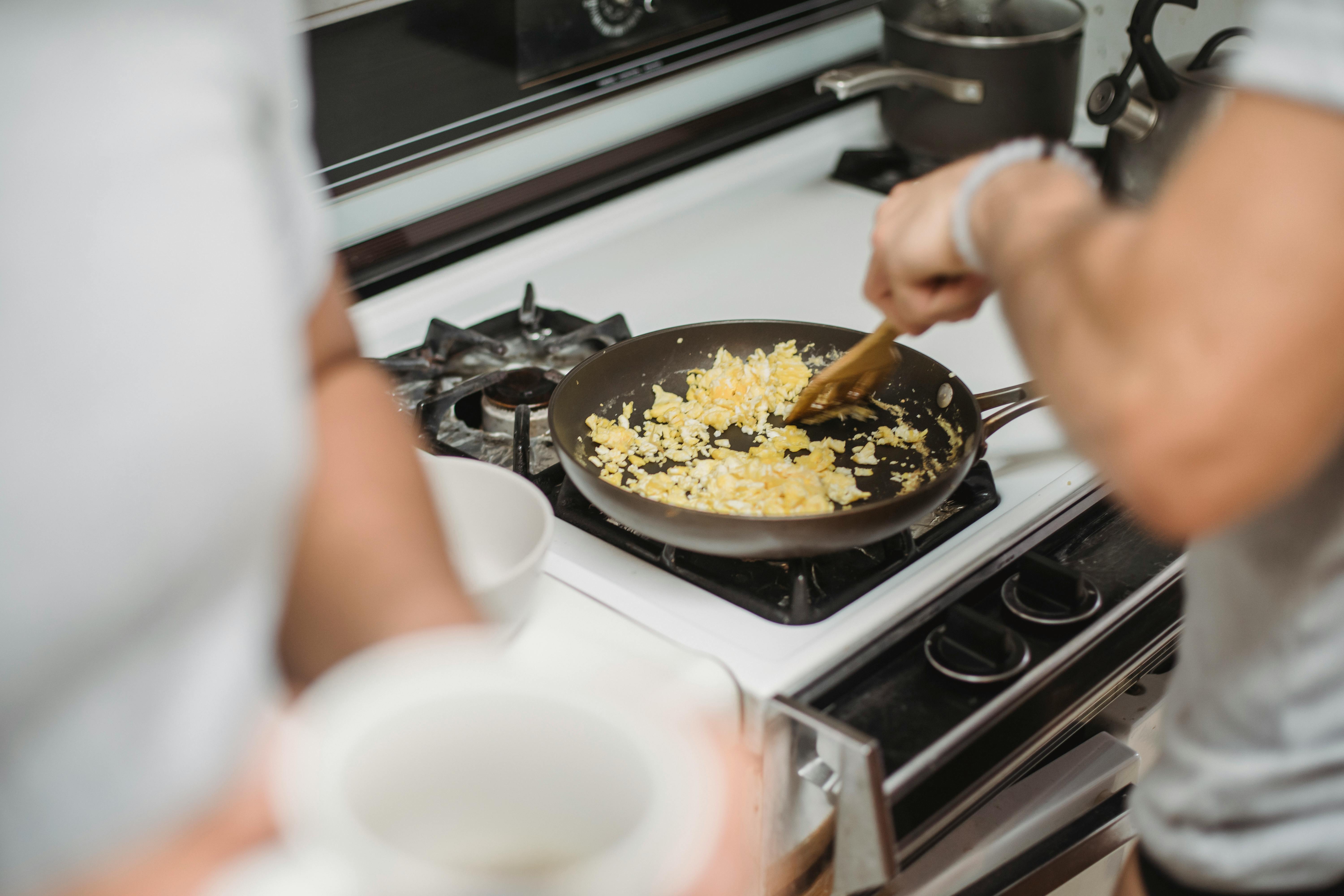
Cutting into a steak or a chicken breast the moment it leaves the pan releases a pool of liquid onto the board. That liquid was supposed to stay inside, and the reason it did not is a matter of timing rather than technique.
Heat pushes moisture inward and squeezes the fibers
Muscle proteins contract as they warm, and the contraction is strongest where the heat is greatest, which is the outer layer. That squeezes moisture out of the hot exterior and toward the cooler center.
By the time the meat comes off the heat, the interior is holding more liquid than it would at rest and is under pressure from the tightened fibers around it. Cutting immediately opens that pressure vessel.
Given a few minutes off the heat, the outer fibers relax as they cool and the moisture redistributes back toward them. The meat then holds most of it when the knife goes in.
Carryover cooking continues after the pan
The outside of a piece of meat is much hotter than the middle when it comes off the heat, and that heat keeps moving inward until the temperature evens out.
The center therefore continues to rise for several minutes, which means meat pulled at exactly the target temperature will overshoot it while resting. Pulling slightly early is what accounts for the difference.
The effect scales with thickness. A thin cutlet barely changes, while a thick roast can climb noticeably, which is why large cuts are rested far longer than small ones.
Resting time is proportional to size
A single chicken thigh or a thin steak needs only a few minutes, roughly the time it takes to plate everything else. A thick cut benefits from ten minutes or more.
Tenting loosely with foil keeps the surface warm without trapping steam against the crust. Wrapping tightly softens the browning that the searing just produced.
The meat does not go cold in that window, because a cooked piece of meat holds heat far longer than most people expect and the plate underneath it is doing nothing.
The rest is free working time in a one-person kitchen
Cooking alone means every task is sequential, and the resting window is the one period where the main item requires no attention at all.
It is the natural moment to deglaze the pan, finish a vegetable, dress a salad or simply wash the board and knife so the sink is not waiting afterward.
Treated that way, resting stops feeling like a delay and becomes the step that lets a single cook get everything to the table at the same temperature.
Questions readers ask
How much should a store cupboard cost to set up?
It is built over several shops rather than in one, which spreads the cost and stops you buying things you will not use. Add two or three items each time rather than attempting the whole list at once.
Are dried pulses worth it over tinned?
They are cheaper per portion and better in texture, and they need soaking and long cooking. For one person the practical answer is often to cook a large batch of dried ones and freeze them in portions.
Also by Nusrat Jan
- Furnish a Flat in the Order You Actually Use ItYour First Place
- The First-Night Box and Why It Gets Loaded LastYour First Place
- Cooking for One Is a Shopping Problem Before It Is a Cooking ProblemCooking for One
- Batch Cooking Without Eating the Same Dinner Five Nights RunningCooking for One