Cooking for One
Making Stock From What You Would Have Binned
Vegetable trimmings and roasted bones carry flavour that dissolves into water with time and gentle heat, turning waste into the base of several cheap meals.

Stock is the one kitchen process where the input is normally rubbish and the output is genuinely useful. Understanding what dissolves into the water explains how to make it well.
What the water is actually extracting
Two things move from solids into water: soluble flavour compounds from vegetables and aromatics, and collagen from connective tissue and bone in a meat stock.
The flavour compounds come out quickly, within half an hour or so. Collagen takes much longer, because it has to break down into gelatine before it will dissolve.
That gelatine is what gives a good stock its body and the slightly sticky feel on the lips when it cools. A vegetable stock has flavour but no body, which is normal.
Gentle heat, not a rolling boil
A stock held at a bare simmer stays clear. A stock boiled hard emulsifies fat into the liquid and breaks solids into fragments, and both make it cloudy and greasy.
Cloudiness is cosmetic but the greasiness is not. Fat suspended through the liquid coats the mouth in a way that makes the stock taste heavy rather than clean.
Bubbles should be occasional rather than continuous. If the surface is agitated across its whole area the heat is too high, and turning it down costs nothing.
Not every trimming belongs in the pot
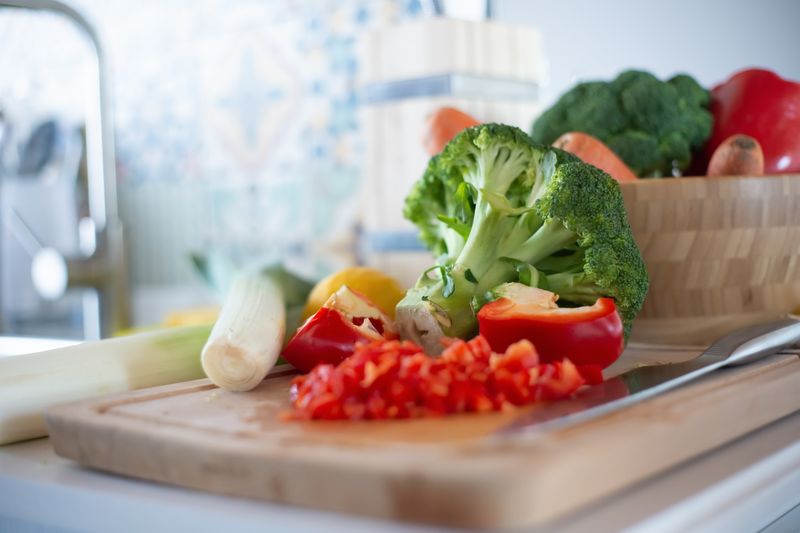
Onion skins, carrot ends, celery tops, leek greens, herb stalks, mushroom stems and parmesan rinds all give flavour without giving trouble. These are the reliable contributors.
Brassicas are the main exception. Cabbage, broccoli and sprout trimmings release sulphur compounds during long cooking and dominate everything else in the pot.
Starchy peelings cloud the liquid, and anything already going soft brings the flavour of decay with it. Trimmings for stock should be offcuts, not rescues.
Roasting first changes the result
Bones and vegetables roasted before they go into the water produce a darker, deeper stock, because browning creates flavour compounds that raw ingredients do not have.
Raw ingredients give a paler and cleaner stock that suits lighter dishes. Neither is better; they are two different products from the same method.
A single household can build up either kind in the freezer, adding trimmings to a bag until there is enough to justify heating a pot.
Storing it in usable amounts
Stock freezes well and keeps its quality, but a large frozen block is difficult to use for one portion. Freezing in small quantities solves this.
Reducing the stock first concentrates it, so less freezer space holds the same flavour and you dilute it back with water when you need it.
Cool it before it goes in the fridge or freezer, and let the fat set on top. That solid layer lifts off cleanly and can be kept separately for cooking.
Questions readers ask
How much should a store cupboard cost to set up?
It is built over several shops rather than in one, which spreads the cost and stops you buying things you will not use. Add two or three items each time rather than attempting the whole list at once.
Are dried pulses worth it over tinned?
They are cheaper per portion and better in texture, and they need soaking and long cooking. For one person the practical answer is often to cook a large batch of dried ones and freeze them in portions.
Also by Nusrat Jan
- Furnish a Flat in the Order You Actually Use ItYour First Place
- The First-Night Box and Why It Gets Loaded LastYour First Place
- Cooking for One Is a Shopping Problem Before It Is a Cooking ProblemCooking for One
- Batch Cooking Without Eating the Same Dinner Five Nights RunningCooking for One