Cooking for One
Frozen Vegetables Are Picked Closer to Ripe
Vegetables destined for the freezer are harvested at maturity and blanched within hours, while fresh produce is picked early to survive shipping and days on a shelf.
Frozen vegetables carry a reputation as the compromise option, bought when the fresh ones ran out. The processing timeline tells a different story, and for one person it also solves the problem of buying produce faster than it can be eaten.
The harvest decision is made for different reasons
Produce headed for a grocery display has to survive picking, packing, refrigerated transport and several days under store lights. It is therefore harvested before full maturity so that it firms up rather than softens on the way.
Vegetables headed for the freezer have no such journey. They can be left on the plant until they are actually ready, because the next step is a processing line rather than a truck to another state.
That difference in harvest timing is the main reason a frozen pea often tastes sweeter than a fresh one that has spent a week in transit and two days in a bag on your counter.
Blanching stops the vegetable from degrading itself
A picked vegetable is still biologically active, and its own enzymes keep breaking down sugars, pigments and texture. That process continues in the refrigerator, slowly, for as long as the vegetable is there.
Freezing alone does not stop enzyme activity, so vegetables are briefly boiled or steamed before freezing to deactivate them. This is why commercially frozen vegetables hold color and flavor and home-frozen raw ones often do not.
The blanch is short and the freeze that follows is fast and very cold, which produces small ice crystals. Large crystals rupture cell walls, which is what turns thawed vegetables to mush.
Portioning is the practical advantage for one person
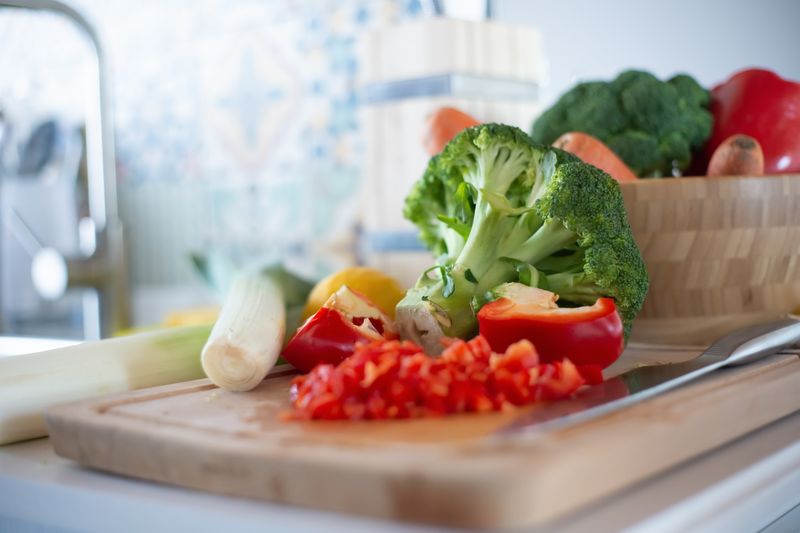
A head of broccoli commits you to eating broccoli several times that week or throwing part of it away. A bag in the freezer lets you take out exactly one serving and put the rest back unchanged.
Waste is the hidden cost of cooking for one, and it is almost always produce. Removing the deadline that fresh vegetables impose removes most of that loss without any change in what you actually eat.
It also makes vegetables available on the nights when shopping did not happen, which is when a meal is most likely to become bread and cheese instead.
Cook them as frozen, not as thawed
Thawing first releases water and leaves the vegetable limp before it reaches the heat. Most frozen vegetables are better added directly to a hot pan, a steamer or a pot of soup while still solid.
A crowded pan will steam rather than brown, because the ice melting off the surface has to boil away first. Cooking a single portion in a wide pan over decent heat avoids that.
The exception is anything with high water content, such as spinach, where squeezing the thawed vegetable dry before it goes into a dish keeps the dish from becoming watery.
Questions readers ask
How much should a store cupboard cost to set up?
It is built over several shops rather than in one, which spreads the cost and stops you buying things you will not use. Add two or three items each time rather than attempting the whole list at once.
Are dried pulses worth it over tinned?
They are cheaper per portion and better in texture, and they need soaking and long cooking. For one person the practical answer is often to cook a large batch of dried ones and freeze them in portions.
Also by Nusrat Jan
- Furnish a Flat in the Order You Actually Use ItYour First Place
- The First-Night Box and Why It Gets Loaded LastYour First Place
- Cooking for One Is a Shopping Problem Before It Is a Cooking ProblemCooking for One
- Batch Cooking Without Eating the Same Dinner Five Nights RunningCooking for One