Cooking for One
Browning Is a Chemical Reaction, Not Just Color
The flavor of seared meat and roasted vegetables comes from reactions between proteins and sugars that require a dry surface and heat above the boiling point of water.

The difference between a piece of chicken that tastes like something and one that tastes like nothing is usually browning. It is a specific set of chemical reactions with specific requirements, and understanding them explains most of what goes wrong in a home pan.
Water is the reason a pan refuses to brown
Browning reactions between amino acids and sugars need temperatures well above the point at which water boils. As long as there is liquid water on the surface of the food, the surface cannot get that hot.
Everything the pan supplies goes into evaporating that water instead of raising the temperature. The food sits in its own moisture, turning gray, until the last of it has boiled off.
This is why patting meat dry with a paper towel before it hits the pan changes the result so noticeably. You are removing the step the pan would otherwise have to spend its heat on.
Crowding the pan converts searing into steaming
Each piece of food releases moisture as it heats. In a pan with space, that vapor escapes and the surface dries out; in a crowded pan it accumulates and everything sits in a humid cloud.
The pan also loses temperature in proportion to how much cold food is added at once. A hot skillet loaded with a full package of mushrooms drops below the browning threshold immediately.
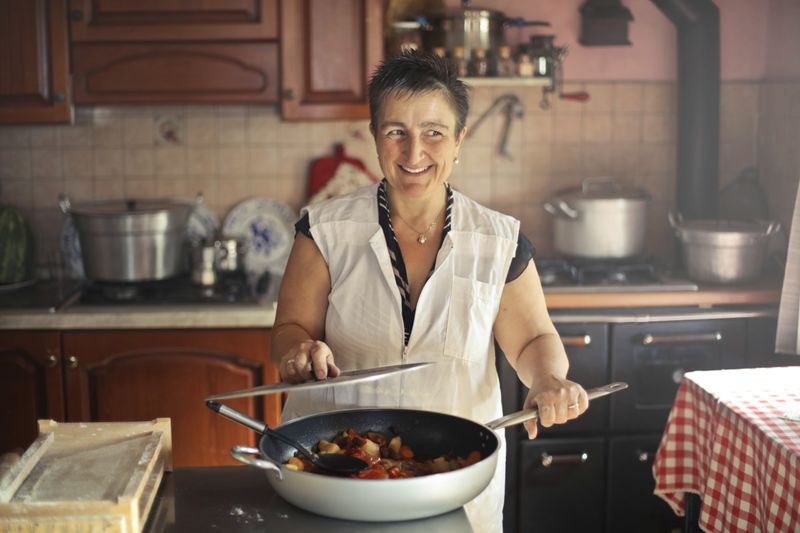
Cooking for one makes this easy to avoid, because a single portion in a normal skillet is naturally uncrowded. Cooking in two batches costs a few minutes and fixes the problem entirely.
Sugar and protein both need to be present
The reaction requires reducing sugars and amino acids together, which is why meat, bread, onions and dairy brown readily while something like plain rice mostly does not.
Caramelization is a separate reaction involving sugars alone, and it is what happens to roasting carrots and onions as their sugars break down. The two often run at the same time on the same food.
A small amount of added sugar, or a brush of something like tomato paste, accelerates browning on a surface that would otherwise stay pale. Too much and it burns before the interior is cooked.
The fond in the pan is the second half of the meal
The browned residue stuck to the bottom of the pan is concentrated flavor, and leaving it there and washing it off discards most of what the browning produced.
Adding liquid to the hot pan dissolves it, which is what deglazing means. Wine, stock, or even water will lift it in seconds while the pan is still hot.
For a single portion this turns a plain piece of meat into something with a sauce, using an ingredient that was already produced and would otherwise have gone down the drain.
Questions readers ask
How much should a store cupboard cost to set up?
It is built over several shops rather than in one, which spreads the cost and stops you buying things you will not use. Add two or three items each time rather than attempting the whole list at once.
Are dried pulses worth it over tinned?
They are cheaper per portion and better in texture, and they need soaking and long cooking. For one person the practical answer is often to cook a large batch of dried ones and freeze them in portions.
Also by Nusrat Jan
- Furnish a Flat in the Order You Actually Use ItYour First Place
- The First-Night Box and Why It Gets Loaded LastYour First Place
- Cooking for One Is a Shopping Problem Before It Is a Cooking ProblemCooking for One
- Batch Cooking Without Eating the Same Dinner Five Nights RunningCooking for One