Cooking for One
A Microwave Heats Water, Not Food
Microwaves excite water molecules rather than warming the dish evenly, which explains cold centers, rubbery edges and why covering and resting matter so much.
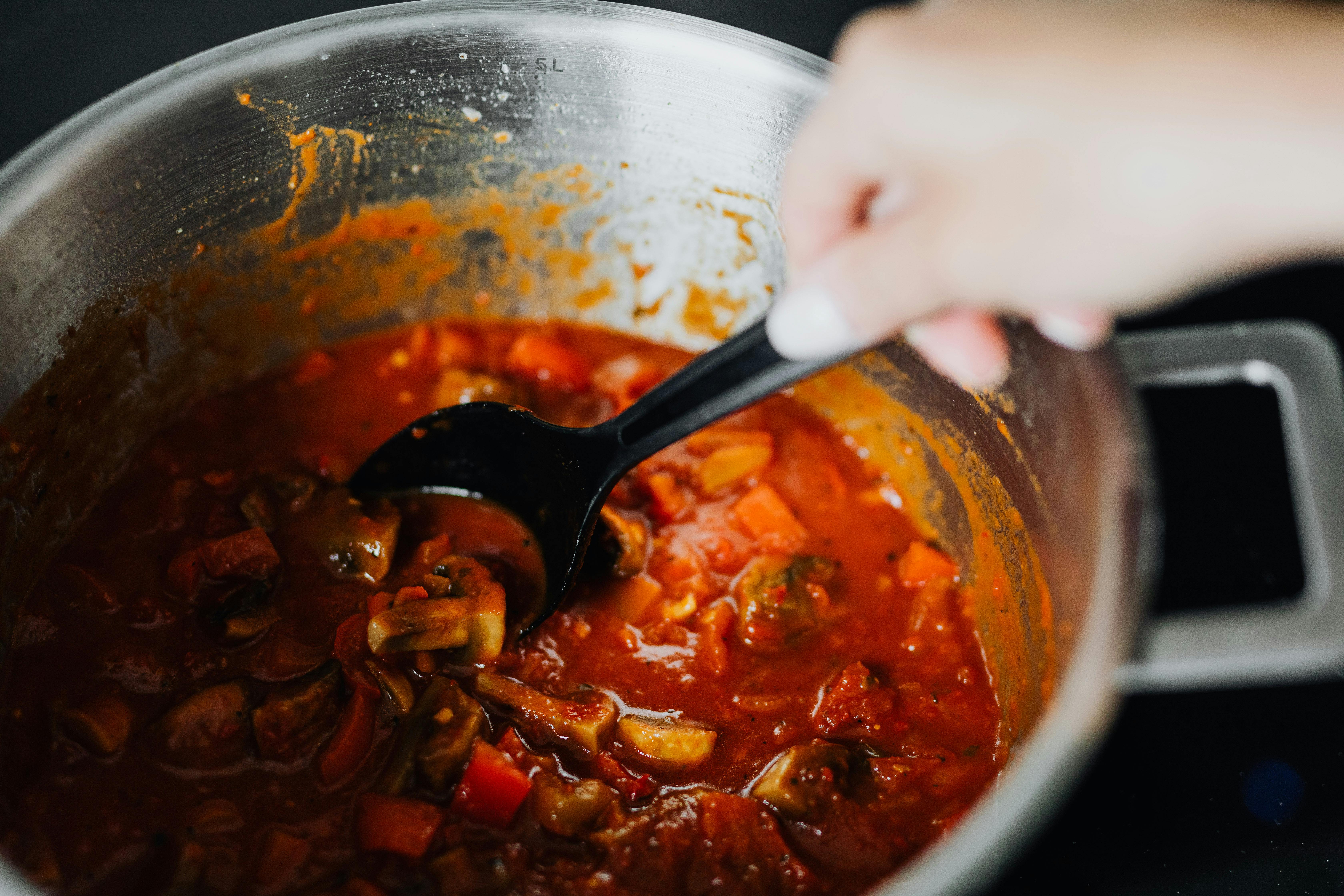
A microwave has a reputation for cooking badly, and most of that reputation comes from using it as though it were a small oven. It heats by a completely different mechanism, and its failures are predictable once that mechanism is clear.
The energy targets water molecules specifically
Microwaves cause water molecules to rotate rapidly, and the friction between them generates heat. Fats and sugars respond to a lesser degree, and dry materials such as ceramic and glass barely respond at all.
This is why the plate stays cool while the food is scalding, and why a dry piece of bread heats poorly while a wet one heats fast. The appliance is heating the moisture, and the moisture heats everything else.
It is also why anything can only reach the boiling point of water while it stays wet. Browning, which requires a much hotter dry surface, essentially cannot happen.
Penetration is shallow and the middle is heated indirectly
The energy is absorbed within roughly the outer inch of food. Beyond that, heat travels inward by ordinary conduction, exactly as it would in a pan.
A deep bowl therefore ends up boiling at the edges while the center is still cold. Spreading food into a shallow, even layer with a hole in the middle is the arrangement that heats most uniformly.
Stirring halfway through does the same job for anything loose, moving the hot outside to the cold inside rather than waiting for conduction to do it slowly.
Covering and resting are part of the process
A loose cover traps steam, which raises the humidity around the food and carries heat into the surface. Uncovered food dries at the edges while the center catches up.
Standing time after the machine stops is not optional. Heat continues to equalize for a minute or two, and much of the evenness that a microwave can achieve happens during that pause.
Reheated food that is scalding in one bite and cold in the next has usually been run too long rather than too short, with no rest to distribute what was applied.
Some foods fail for structural reasons
Anything with a skin or a membrane, such as an egg yolk or a sausage, builds internal steam pressure with no escape route and can burst. Piercing it first releases the pressure.
Foods with very uneven water content heat unevenly by definition, which is why a filled pastry can have a molten center and a cool exterior.
Used for what it does well, which is reheating moist food and cooking vegetables in their own water, it is the most efficient appliance in a one-person kitchen.
Questions readers ask
How much should a store cupboard cost to set up?
It is built over several shops rather than in one, which spreads the cost and stops you buying things you will not use. Add two or three items each time rather than attempting the whole list at once.
Are dried pulses worth it over tinned?
They are cheaper per portion and better in texture, and they need soaking and long cooking. For one person the practical answer is often to cook a large batch of dried ones and freeze them in portions.
Also by Nusrat Jan
- Furnish a Flat in the Order You Actually Use ItYour First Place
- The First-Night Box and Why It Gets Loaded LastYour First Place
- Cooking for One Is a Shopping Problem Before It Is a Cooking ProblemCooking for One
- Batch Cooking Without Eating the Same Dinner Five Nights RunningCooking for One