Your First Place
Storage Is a Layout Problem Before It Is a Shelving Problem
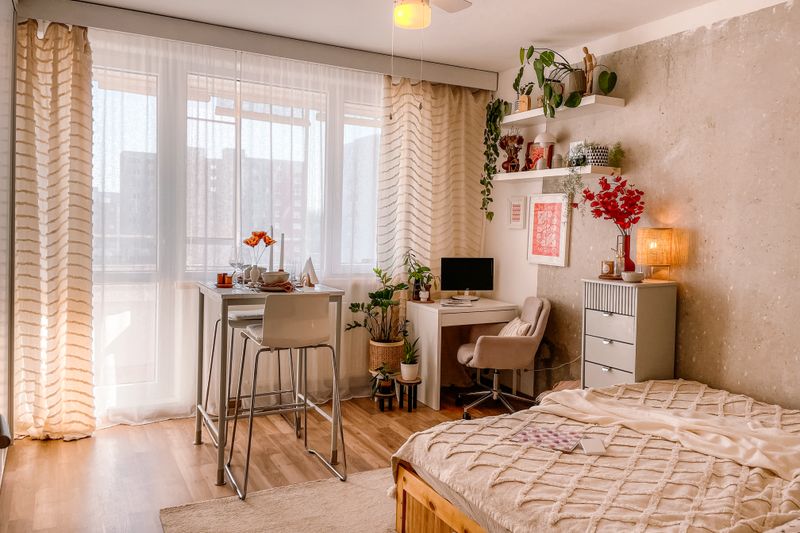
Small flats run out of space because things are stored away from where they are used, not because there are too few shelves to put them on.

The instinct in a small flat is to buy more storage. The more useful move is to work out where each thing is used, because most clutter is simply stored in the wrong room.
Things end up where they are put down
Objects accumulate wherever they are last handled rather than wherever they belong. A flat becomes untidy at the points where use and storage are furthest apart.
Shoes by the sofa, post on the kitchen counter and chargers on the floor are all the same fault: the storage for that item is somewhere other than the point of use.
Adding a shelf in the wrong room does not fix this. The item still has to be carried to it, and the carrying is the step that reliably does not happen.
Frequency should decide height and distance
Daily items belong between hip and shoulder height and within arm's reach of where they are used. This is the smallest and most valuable storage in any flat.
Weekly items can sit lower or higher, and anything used a few times a year can go anywhere at all, including the awkward top of a wardrobe.
Most small flats are full because rarely used items occupy the prime positions. Moving a suitcase off the accessible shelf frees the space that everyday clutter needs.
Vertical space is usually unused
Floor area is fixed by the flat, but height is often wasted. The band between the top of the furniture and the ceiling is empty in most rented rooms.
Tall narrow storage takes far less floor than wide low storage of the same capacity, which matters when the floor is the constrained dimension rather than the volume.
The back of doors, the space under the bed and the gap beside a fridge are all similar cases: capacity that exists already and is simply not being used.
One-in, one-out is the only durable control
Storage capacity fills to match itself. Adding shelves increases what a flat can hold, but it does not slow the rate at which possessions arrive.
The only mechanism that keeps a small flat workable over years is removing something when something else comes in, applied loosely rather than as an exact rule.
This matters most in the categories that expand quietly: cables, kitchen gadgets, cleaning products and clothes that are kept in case they come back into use.
Rented flats limit the options
Fixing storage to walls usually needs permission, and holes may have to be filled at the end of the tenancy. Freestanding storage avoids the question entirely.
Tension rods, over-door hooks and stackable boxes achieve much of the same result without fixings, and they move with you to the next place.
Buying storage that suits the flat you are in rather than the flat you have is the usual mistake. Anything sized to one particular alcove becomes useless the moment you move.
Questions readers ask
Will an anti-mould paint solve it?
It suppresses growth on that surface for a while and changes nothing about the water arriving. Use it after the cause is dealt with, never instead.
Is a dehumidifier worth running?
For condensation it genuinely helps, particularly in a bedroom or wherever washing dries. For rising or penetrating damp it just runs forever against a supply that never stops.
Also by Sahil Raina
- The Inventory You Take on Day One Decides the Argument at the EndYour First Place
- Measure the Doorway Before You Buy the SofaYour First Place
- Reading a Tenancy Agreement Line by LineYour First Place
- The Smallest Kitchen Kit That Can Still Cook Real FoodYour First Place