Your First Place
Square Footage Is Measured Generously
Advertised apartment size often includes walls, closets and unusable corners, so two units with identical numbers can hold very different amounts of furniture.

Square footage is the standard shorthand for how big an apartment is, and it is a weaker measure than it appears. Two units listed at the same size can differ substantially in how much can actually be put in them.
There is no single mandatory measuring standard
Residential measurement conventions vary, and rental listings are not held to the same standards as an appraisal. Some figures are taken to the inside face of the walls and some to the outside.
Measuring to the outside includes the thickness of the walls themselves, which in an older masonry building is not a small quantity. The number rises without a square inch of floor being added.
Some listings also include closets, mechanical closets and even a portion of shared hallway. Others use a builder's figure that was never re-verified after a renovation moved a wall.
Usable floor area is what furniture needs
A room's capacity is determined by uninterrupted wall length and clear floor space, not by total area. Doors, radiators, windows to the floor and awkward columns all remove usable wall.
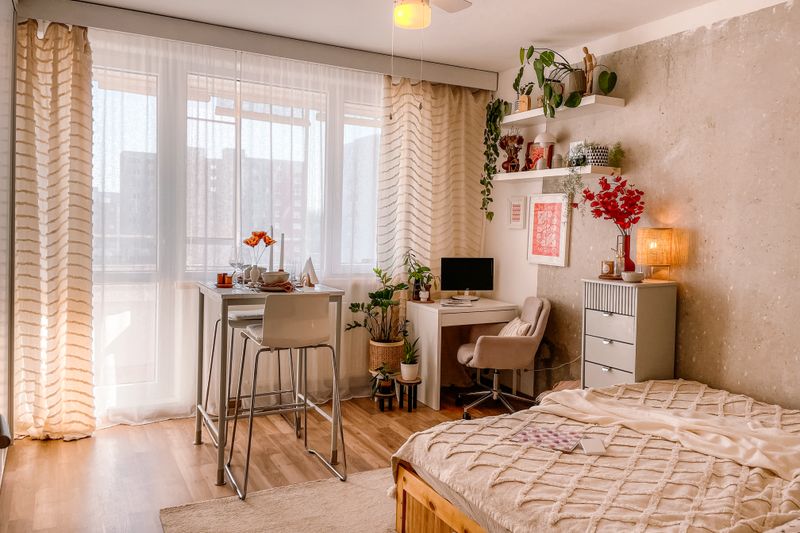
A long narrow room and a square room of identical area behave completely differently. One takes a sofa and a bed comfortably; the other has a single wall that anything large must share.
Door swings are the most commonly overlooked constraint, because a door that opens inward sterilizes a wedge of floor that cannot hold anything permanent.
Ceiling height and light change the perception
A high ceiling makes a small footprint feel considerably larger, which is why older converted buildings can feel spacious at modest square footage.
Window placement does the same. A room with light from two directions reads as bigger than an identical room lit from one, regardless of what the listing says.
These are genuine effects on how it is to live somewhere, but they do not help with the practical question of whether a particular bed will fit.
A tape measure settles it in ten minutes
Measuring the main wall in each room during a tour, along with the doorways and the hallway leading to the unit, produces numbers that mean something.
Comparing those against the dimensions of what you already own converts a vague impression into a decision, and it prevents the most expensive moving-day discovery.
Photographs taken during a tour are worth almost nothing for size, because wide-angle lenses expand a room in a way that no amount of experience corrects for.
Questions readers ask
Will an anti-mould paint solve it?
It suppresses growth on that surface for a while and changes nothing about the water arriving. Use it after the cause is dealt with, never instead.
Is a dehumidifier worth running?
For condensation it genuinely helps, particularly in a bedroom or wherever washing dries. For rising or penetrating damp it just runs forever against a supply that never stops.
Also by Sahil Raina
- The Inventory You Take on Day One Decides the Argument at the EndYour First Place
- Measure the Doorway Before You Buy the SofaYour First Place
- Reading a Tenancy Agreement Line by LineYour First Place
- The Smallest Kitchen Kit That Can Still Cook Real FoodYour First Place