
Fixing Things
Furniture That Wobbles and the Cheap Fixes That Work
A wobbling table is rarely a broken table. It is a joint that has loosened or a floor that is not flat, and each has a different two-minute answer.
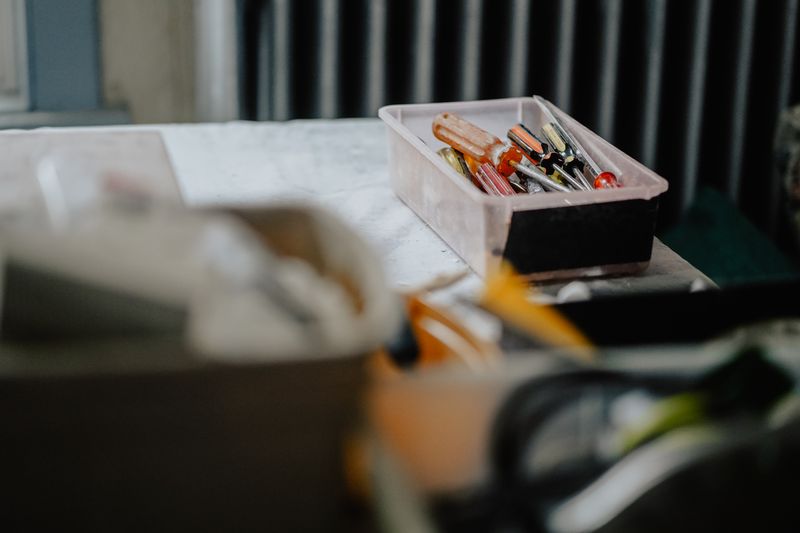
The options around fixing wobbly furniture are set out side by side below, with the conditions that genuinely favour one over the other.
The difference in one place
- Test on a known flat surface to find out whether the fault is the furniture or the floor.
- Wood glue in a loosened joint restores more strength than any bracket.
- Tightening one bolt at a time on flat-pack furniture pulls it out of square.
Is it the furniture or the floor
Move the item to a different part of the room, or to a surface you know is flat, and see whether the wobble follows it. A wobble that disappears on flat ground is a floor problem, solved with a felt pad or a shim under one leg. A wobble that follows the furniture is a joint problem, and tightening the wrong thing will not fix it.
Rock it gently in two directions to find where the movement is, since a joint that moves is easy to feel and hard to see. This one test saves most of the wasted effort, because people habitually tighten everything on an item standing on an uneven floor.
Flat-pack and the sequence of tightening
Tighten every fixing loosely first, then work round the item in stages, which lets the frame settle square before anything is pulled tight. Tightening one bolt fully before the others pulls the frame out of square and locks the error in place.
By the second month, the back panel on a cabinet is structural, not cosmetic, since it triangulates the frame and stops it racking sideways. A cabinet that leans in one direction usually has a back panel fitted loosely or pinned in the wrong order. Loosen everything, stand the item square against a straight surface, and retighten in sequence, which fixes most leaning furniture entirely.
Loose joints in wooden furniture
A traditional chair or table joint loosens as glue fails, and the movement then wears the timber, making it looser still. The proper repair is to separate the joint, clean the old glue off both surfaces, and reglue with wood glue under clamping pressure. Glue applied into a loose joint without cleaning it out sticks to old glue rather than to timber and fails again quickly.
Clamping matters, since wood glue is strong in a tight joint and weak in a gap, and rope tied around and twisted works as a clamp. Screwing a bracket over a failing joint is a visible last resort that also makes a proper repair harder later.
Screws that no longer grip
A screw spinning in particle board has destroyed the material around it, and driving it harder achieves nothing. Filling the hole with glue and a wooden dowel or matchsticks, letting it set and redrilling gives fresh material to grip.
In solid timber the same fix works, and a slightly longer or thicker screw is often enough on its own. Cam-lock fittings that no longer hold can sometimes be rotated to bite into fresh material or repositioned slightly.
This is the most common failure in inexpensive furniture and it is genuinely repairable, which most people do not attempt.
Drawers, doors and runners
A drawer that will not close is usually off its runner, overloaded, or has something jammed behind it rather than being broken. Remove the drawer completely, check the runner alignment on both sides and look for a screw that has worked loose. Cabinet doors that no longer line up are adjusted at the hinge, and most concealed hinges have two or three adjustment screws.
By the second month, adjust one screw at a time by a small amount and check, since turning several at once makes it impossible to know what changed. A quick wipe and a suitable lubricant on metal runners resolves a surprising number of drawers that felt terminal.
Leave gas, mains electrics and anything behind a wall to someone qualified and insured.
Stability and safety
Tall furniture can tip, and anti-tip straps or brackets fixing an item to the wall are the standard remedy. This matters most for chests of drawers, bookcases and anything a person might pull on or a drawer might overbalance.
Load heavy items in the lowest drawers and on the lowest shelves, which lowers the centre of gravity substantially. Check the fixings on anything wall-mounted once a year, since load and use gradually loosen them. In a rented flat, ask before fixing anything to a wall, and use a free-standing solution where drilling is not permitted.
Side by side
| Consideration | What it means in practice |
|---|---|
| Is it the furniture or the floor | Test on a known flat surface to find out whether the fault is the furniture or the floor. |
| Flat-pack and the sequence of tightening | Wood glue in a loosened joint restores more strength than any bracket. |
| Loose joints in wooden furniture | Tightening one bolt at a time on flat-pack furniture pulls it out of square. |
The takeaway
Find out whether it is the floor first, then tighten in sequence rather than one bolt at a time.
Living alone is a skill, and every skill looks like luck from outside.
Questions readers ask
Should I use screws or glue on a loose chair?
Glue in a properly cleaned and clamped joint is stronger and invisible, and it is the correct repair for traditional joinery. Screws are a fallback where the joint cannot be dismantled.
Why does my flat-pack wardrobe lean?
Almost always because the back panel is loose or was fitted with the frame slightly out of square. Loosen everything, square it against a wall and retighten in stages.
Also by Owais Bhat
- What Actually Belongs in a First ToolkitFixing Things
- Unblocking a Drain Before You Reach for the ChemicalsFixing Things
- Silicone Sealant Fails When You Rush ItFixing Things
- Filling a Hole in a Wall So It DisappearsFixing Things


