Laundry & Clothes
The Laundromat Runs on Someone Else's Schedule
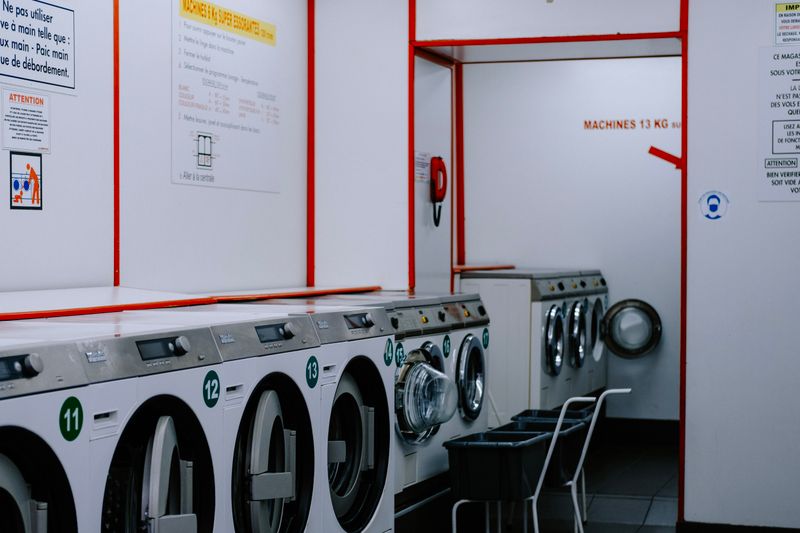
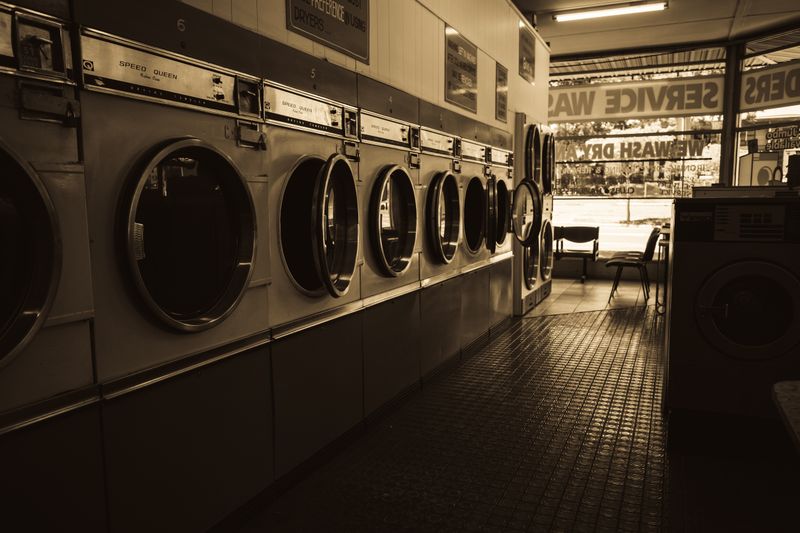
Shared and coin-operated machines impose queueing, fixed cycle times and a machine you cannot inspect, and each of those changes how laundry should be sorted and loaded.
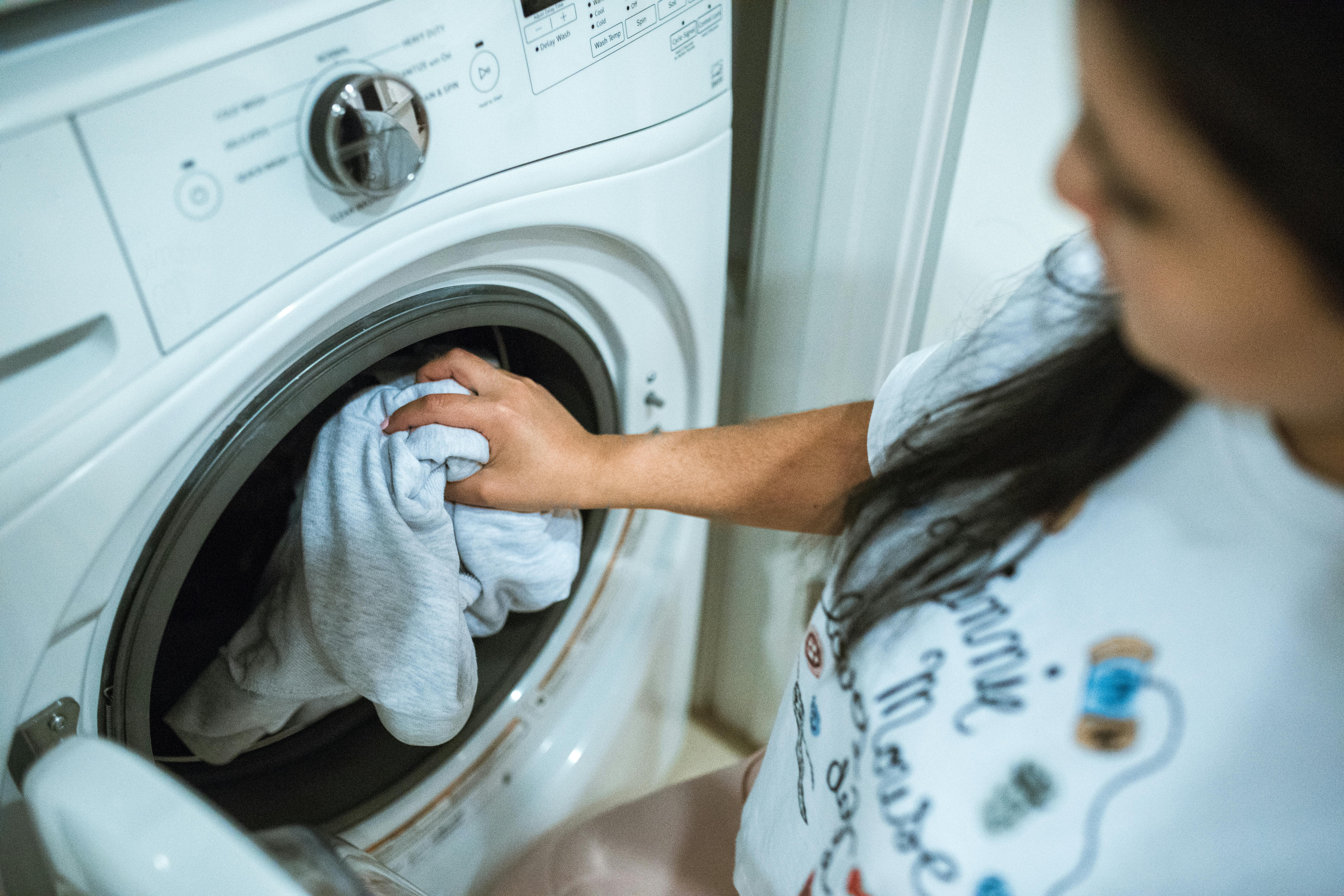
Doing laundry outside your own apartment is a different task from doing it at home. The machine is not yours, the time is not flexible, and the constraints reshape how the whole job should be organized.
Machine time is the scarce resource
At home, a wash can run while you do something else and sit in the drum afterward without consequence. In a shared room or a laundromat, an idle machine is a queue forming behind you.
That changes the optimal load size. Splitting into many small loads is efficient at home and expensive in both money and time when each load occupies a paid machine and a slot in the room.
Large-capacity commercial washers exist for exactly this reason. One properly loaded large machine costs less and finishes sooner than three small ones run in sequence.
You cannot inspect what ran before you
A shared drum may have just finished a load of shop rags, dog bedding or something that left bleach residue. There is no way to know and no way to ask.
Running an empty hot cycle first is the cautious answer and costs a cycle. Wiping the drum and the door seal with a damp cloth takes seconds and catches most visible residue.
The detergent dispenser is worth checking too, because leftover product from a previous user will end up in your load whether or not you added any yourself.
Commercial dryers run hotter than home ones
Laundromat dryers are gas fired and considerably more powerful than a household unit, which is why they finish so quickly and why they shrink and damage clothing more readily.
Anything with elastic, printed graphics or synthetic fiber suffers most, because heat is what degrades those. Pulling those items out early and letting them finish on a rack protects them.
Buying dryer time in short increments and checking rather than paying for a long block avoids over-drying, which is the main cause of laundromat damage to clothes.
Transport dictates how you sort
Everything has to be carried both ways, and wet laundry is dramatically heavier than dry. A load that fills a bag comfortably on the way there may not be manageable on the way back.
Sorting at home rather than on a folding table means less time in the room and fewer chances to leave something behind, which is where most laundromat losses happen.
Going at a genuinely quiet hour, usually early on a weekday, converts the whole task from a wait into a straightforward hour, and the price is identical.
Questions readers ask
Is it wasteful to run a half load?
Somewhat, since machines use less water on a half load but not proportionally less. Waiting for a full load is more efficient, provided you are not left without clean clothes.
How often should jeans be washed?
Far less often than most people assume, since washing is what fades and wears them. Airing between wears and spot cleaning handles most of it.
Also by Ritu Dhar
- Too Much Detergent Is Why Your Towels SmellLaundry & Clothes
- The Washing Machine Needs Washing TooLaundry & Clothes
- Ironing Is a Sequence, Not a SkillLaundry & Clothes
- Stains Come Out by Category, Not by Miracle SprayLaundry & Clothes