Laundry & Clothes
Static Cling Is a Dryness Problem
Tumbling builds electrical charge on fabric that only escapes when the air carries enough moisture, which is why static appears in winter and disappears in humid weather.
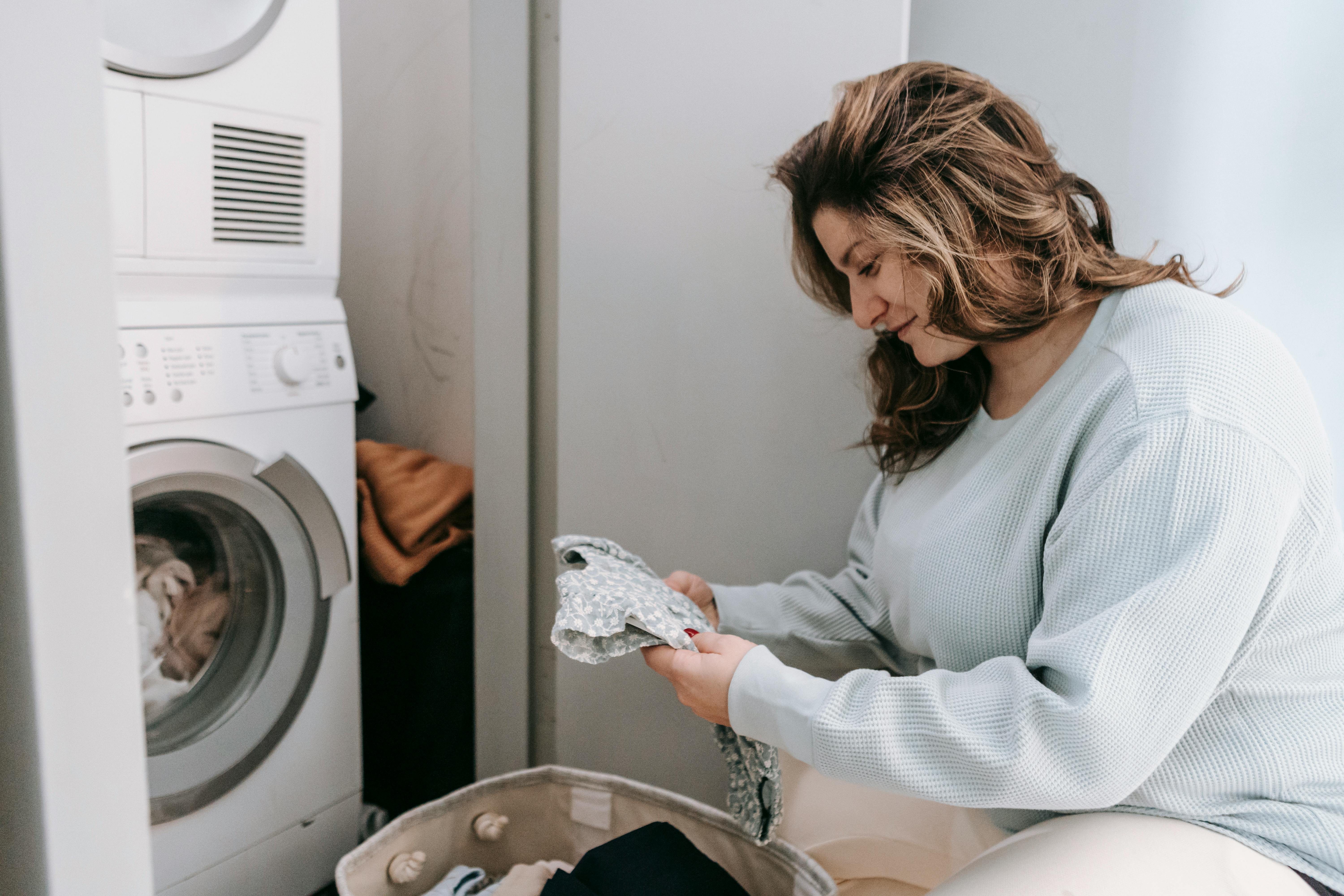
Clothes that stick together and shock you on the doorknob are showing an electrical charge that has nowhere to go. It is a seasonal problem because the escape route depends on humidity in the air.
Tumbling separates charge between different fibers
When two dissimilar materials rub together and separate, electrons transfer from one to the other, leaving one positively charged and the other negatively charged.
A dryer does this thousands of times per cycle with a drum full of mixed fabrics. Synthetics and wool sit at opposite ends of the tendency to give up or accept electrons.
Cotton alone generates comparatively little, which is why an all-cotton load emerges quietly and a load mixing fleece with cotton sheets emerges as a single clinging mass.
Moisture is what lets the charge drain away
A thin film of water on a fiber surface conducts, allowing accumulated charge to equalize and dissipate. Humid air keeps that film present and static never builds.
Heated indoor air in winter holds very little moisture relative to its capacity, so the film disappears and the charge stays where it was generated.
This is why the same dryer produces static in January and none in July, with no change in the machine, the detergent or the clothes going into it.
Over-drying is the controllable cause
Charge accumulates fastest once the load is fully dry and continues tumbling, because there is no residual moisture left to bleed it away.
Stopping the cycle while items are barely damp and letting them finish on a rack removes most static without any product at all.
Drying synthetics separately from cotton also helps, since the charge separation requires two dissimilar materials in contact. A uniform load has much less to work with.
What the common remedies actually do
Fabric softener and dryer sheets deposit a thin conductive and lubricating film on fibers, which both drains charge and reduces the friction that generates it.
That film also reduces absorbency, which is why towels and athletic fabrics treated repeatedly stop performing the job they were bought for.
Wool dryer balls work differently, separating the load so it tumbles loosely and dries faster and more evenly, which shortens the period during which a bone-dry load is still turning.
A humidifier or simply drying a rack of laundry indoors raises the moisture in the room, which addresses the underlying cause rather than treating each load individually. Winter static in clothing and static from carpet share the same origin, so a room that stops shocking you also stops clinging to your shirt.
Questions readers ask
Is it wasteful to run a half load?
Somewhat, since machines use less water on a half load but not proportionally less. Waiting for a full load is more efficient, provided you are not left without clean clothes.
How often should jeans be washed?
Far less often than most people assume, since washing is what fades and wears them. Airing between wears and spot cleaning handles most of it.
Also by Ritu Dhar
- Too Much Detergent Is Why Your Towels SmellLaundry & Clothes
- The Washing Machine Needs Washing TooLaundry & Clothes
- Ironing Is a Sequence, Not a SkillLaundry & Clothes
- Stains Come Out by Category, Not by Miracle SprayLaundry & Clothes