Laundry & Clothes
Buying Clothes That All Wash the Same Way
A wardrobe built around one or two care requirements produces full loads and fewer mistakes, which is a laundry decision made at the point of purchase.
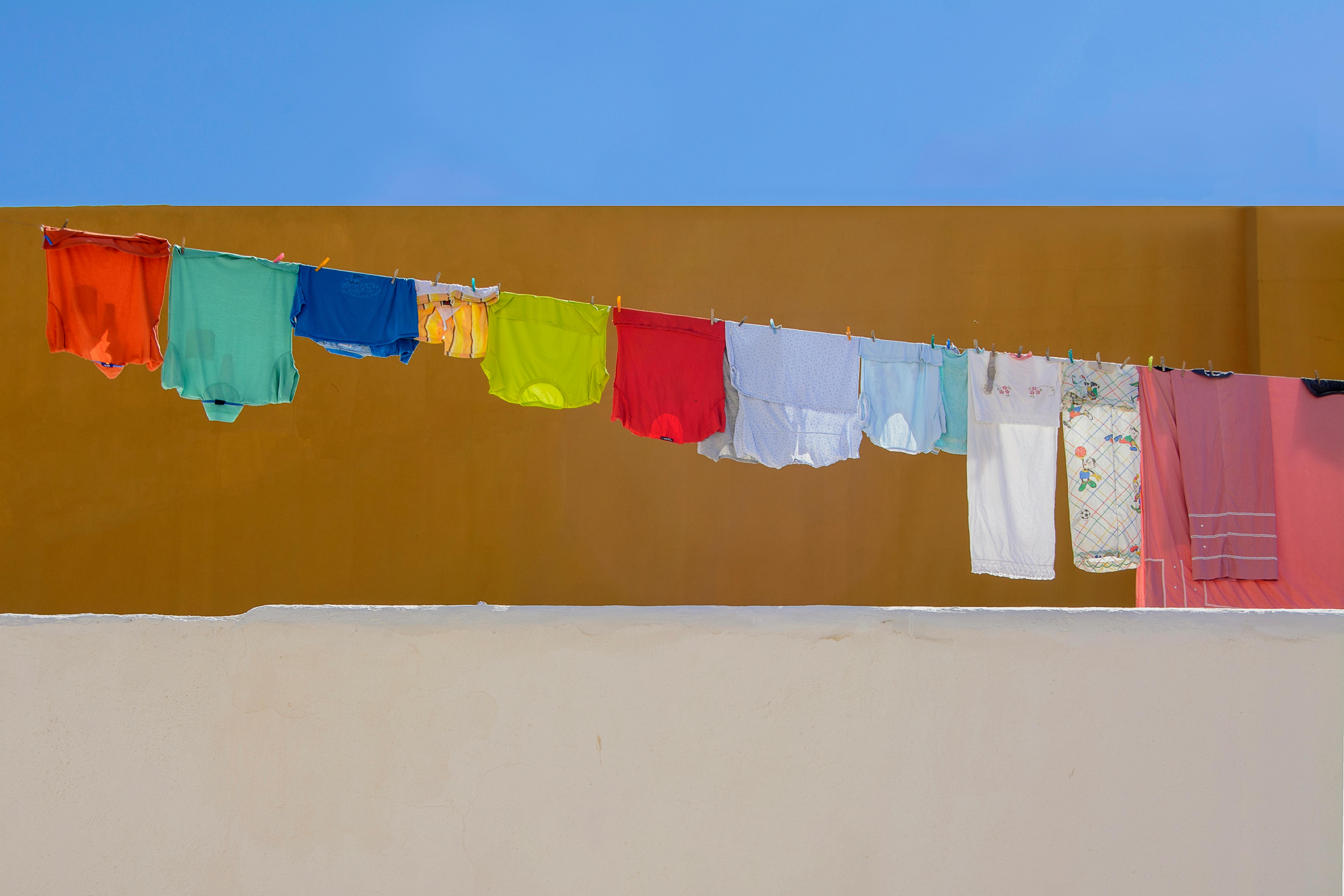
A single person generates laundry slowly, and a wardrobe spread across many care requirements produces several small loads instead of one full one. The fix happens in the shop.
Small households cannot fill specialist loads
A family accumulates enough wool, enough delicates and enough whites to justify separate cycles. One person accumulates two wool jumpers and one silk shirt.
Those items then wait for company that never arrives, and eventually get washed with something incompatible or not washed at all.
The alternative is a wardrobe where most items tolerate the same cycle, so the default load is genuinely full and the exceptions are few enough to hand wash.
Fibre determines almost everything
Cotton, linen and most synthetics tolerate a normal warm wash and a tumble dry. Wool, silk and viscose do not, and mixing them costs a cycle.
Blends follow their most delicate component, so a cotton blend with a wool content needs the wool treatment despite being mostly cotton.
Reading the composition rather than the care symbol tells you more, because the composition explains why the symbol says what it does.
Colour groups should be few and wide
A wardrobe with three colour families washes in three loads. One built around a narrower palette washes in one or two.
This is not about style so much as arithmetic: every additional group divides the same volume of laundry into smaller and less efficient loads.
Dark and mid tones combine safely with each other. It is whites and strong new colours that genuinely need separating, and both can be minimised by choice.
Construction affects durability more than price
Seams finished so the raw edge is enclosed survive repeated washing far better than a single overlocked edge, and the difference is visible when you turn a garment inside out.
Buttons sewn with a shank, and spare buttons supplied, indicate a garment designed to be repaired rather than replaced.
Knitwear made from longer fibres pills less, which is the difference between a jumper looking tired in a season and looking acceptable for years.
Fewer items washed more often
A smaller wardrobe reaches the machine more frequently, which sounds worse and generally is not. Clothes washed before they are heavily soiled need gentler treatment.
It also removes the storage problem, since a wardrobe that fits allows garments to hang without compressing each other.
The combined effect is fewer cycles, less sorting, and a set of clothes that stays in usable condition longer than a larger and more varied collection would.
Questions readers ask
Is it wasteful to run a half load?
Somewhat, since machines use less water on a half load but not proportionally less. Waiting for a full load is more efficient, provided you are not left without clean clothes.
How often should jeans be washed?
Far less often than most people assume, since washing is what fades and wears them. Airing between wears and spot cleaning handles most of it.
Also by Ritu Dhar
- Too Much Detergent Is Why Your Towels SmellLaundry & Clothes
- The Washing Machine Needs Washing TooLaundry & Clothes
- Ironing Is a Sequence, Not a SkillLaundry & Clothes
- Stains Come Out by Category, Not by Miracle SprayLaundry & Clothes